

WHY YOUR PETS ARE NO LONGER SAFE IN HILLINGDON
Updated: Jan 6, 2022
The 10-month-old cat mills around my feet as I prepare Naima Anwar, 18, for her first in-depth discussion on an issue she says “to this day traumatizes me to the very core.”
Milo, the name of the feline friend nearly disrupting our otherwise peaceful interview, is a jumpy cat as I soon discover. “He’s always so excited whenever a visitor comes over,” reveals Ms. Anwar.
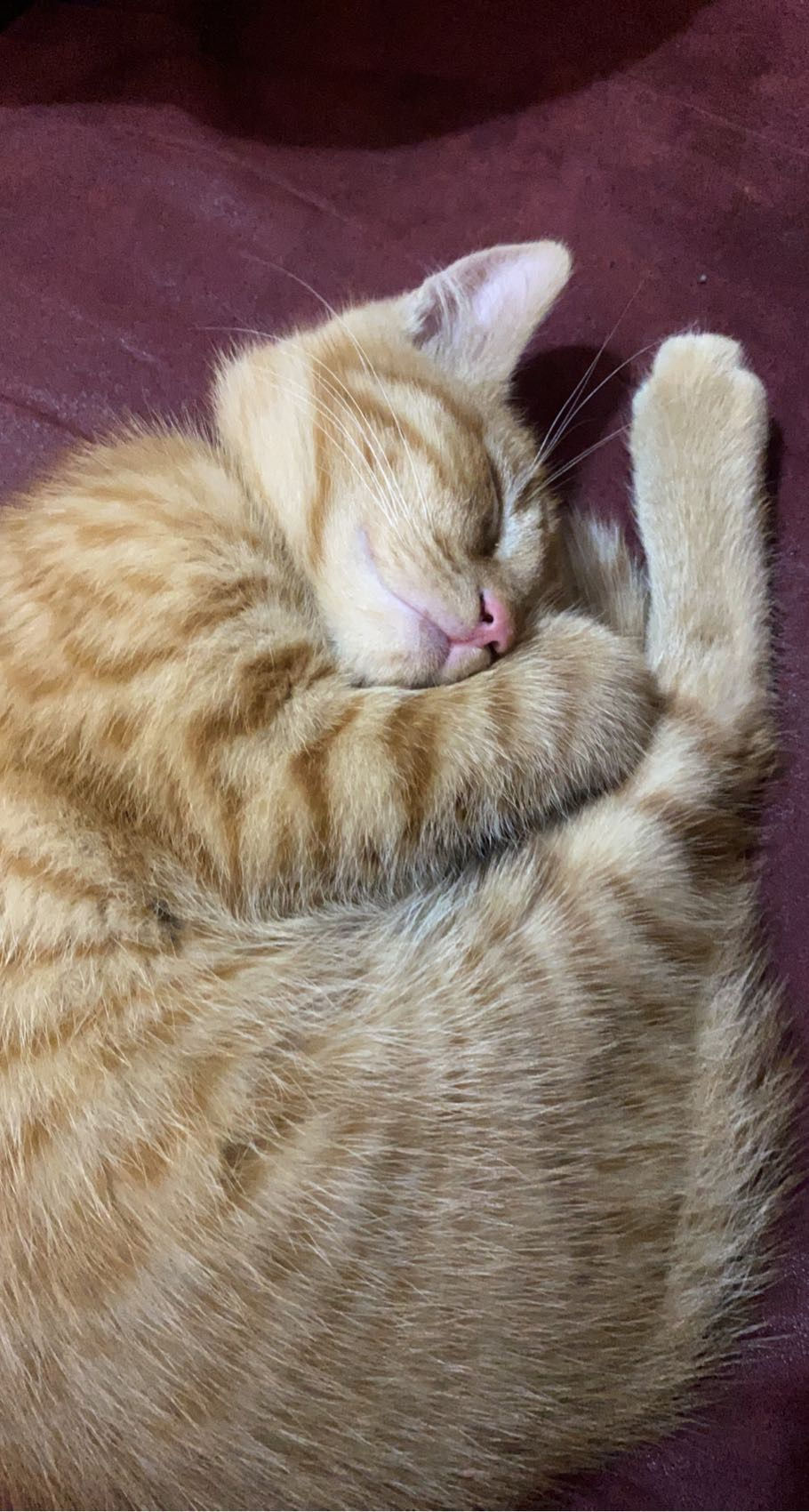
Milo the cat sleeps peaceful at his owner's home couch in West Drayton
Just six weeks ago, Milo had mysteriously gone missing from their home in West Drayton in the borough of Hillingdon causing panic and alarm to a household that had just adopted the cat less than a year ago. “I remember I was at work that day when my mum called me with the sad news,” shares Ms. Anwar, “I immediately broke down and my boss allowed me to go home and begin the search and rescue efforts.”
Sadly, the borough of Hillingdon is no stranger to such occurrences affecting pets and their owners. Just in the last decade, statistics from London’s Metropolitan Police Department reveals that Hillingdon ranks highest in the total number of stolen and lost pets between January 2010 and November 2021.
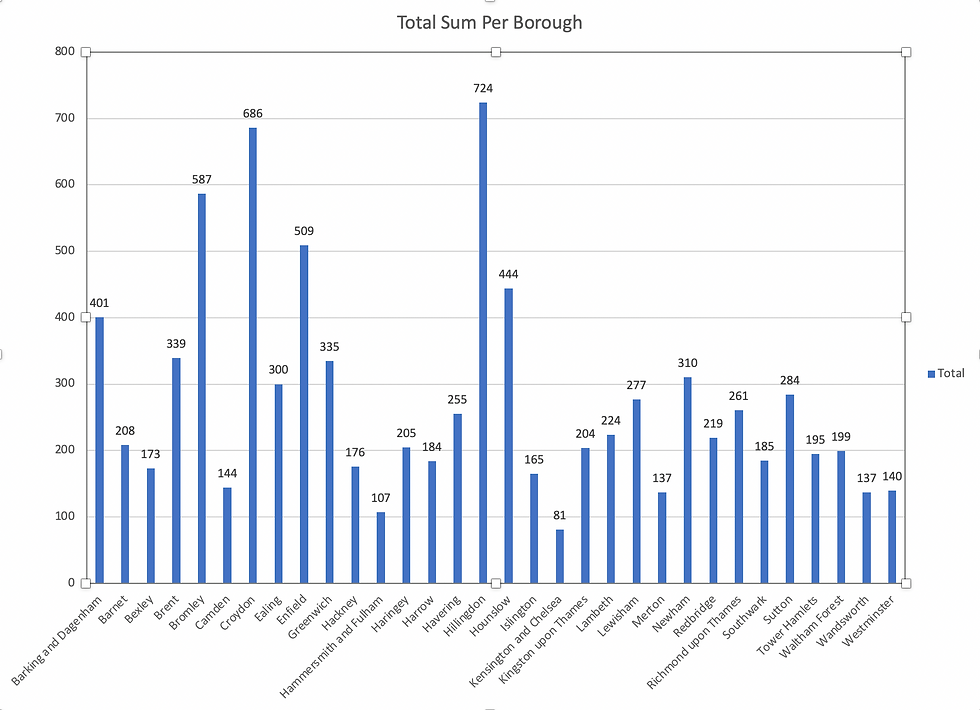
Data graphics showing total number of lost pets in the last decade
The borough has had a total number of 724 animals reported either lost or missing within that time period, the highest in any borough in England. It’s a worrying statistic that the Royal Society for the Prevention of Cruelty to Animals (RSPCA) says could get worse if pet owners are not more careful. “If your pet is missing, please alert your microchip company and inform local rescue centres and vet practices as well as speaking to neighbours and local businesses” reads a statement from RSPCA when contacted about the issue by The Hillingdon Herald.
“Our Milo did not have a collar or microchip when he went missing,” admits Ms. Anwar, “that is what made the situation even worse for us as a family.” Alongside her sister, her best friend, both her parents and a host of neighbours the Anwar family embarked on a three-day search of Milo. The search covered an area of approximately 6 kilometres.
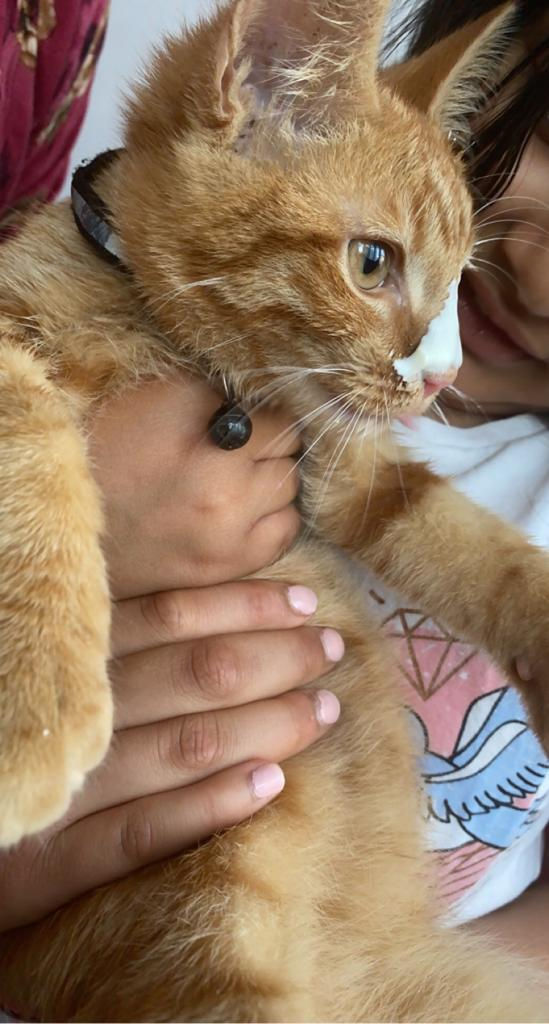
Eventually, Milo was spotted miles away at the Colindale Primary School grounds thanks to a lot of online campaign messages shared out by Naima on her instagram and facebook accounts.
“We immediately got to the school grounds and started the search. After about an hour or so we heard him meowing and I immediately knew that was him” Ms. Anwar says with glee on her face.
Milo eventually returned home to some warm milk, a blanket and a newly micro-chipped collar. “She’s never leaving my sight” Ms. Anwar tells us. They bought the collar immediately after his rescue to ensure that they can easily track Milo’s movement and location at all times. But the Royal Society for the Prevention of Cruelty to Animals (RSPCA) believes that micro-chipping the animals (and not the collar) is the best bet of keeping your pet safe.
(Above: Milo on the day of his rescue on 5th October 2021).
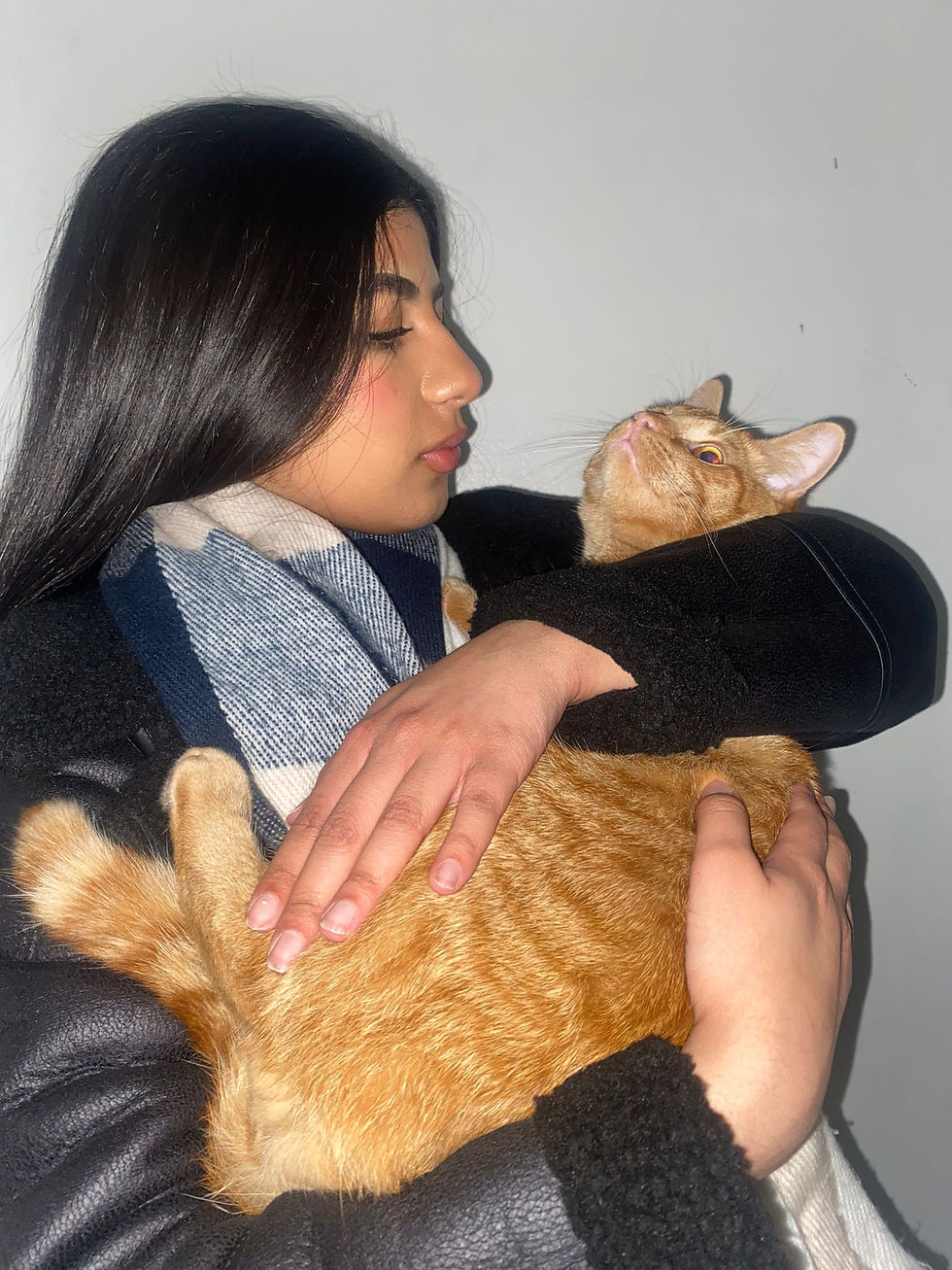
(Right: Milo and his owner Naima Anwar during the interview).
On their website RSPCA say: “Thousands of pets are lost every year and many are never reunited with their owners; micro-chipping can help to change that. While collars and tags can get caught or removed - microchipping identifies your pet permanently and effectively. Microchipping is only effective if you keep your details up to date. If you move house you must make sure that you tell the database you are registered with so that they have your up-to-date contact details.”
Milo the cat forms just a fraction of statistics of lost animals that have eventually found their way back home to the loving hands of their owners. A majority of cases of lost pets still remain unresolved to date.
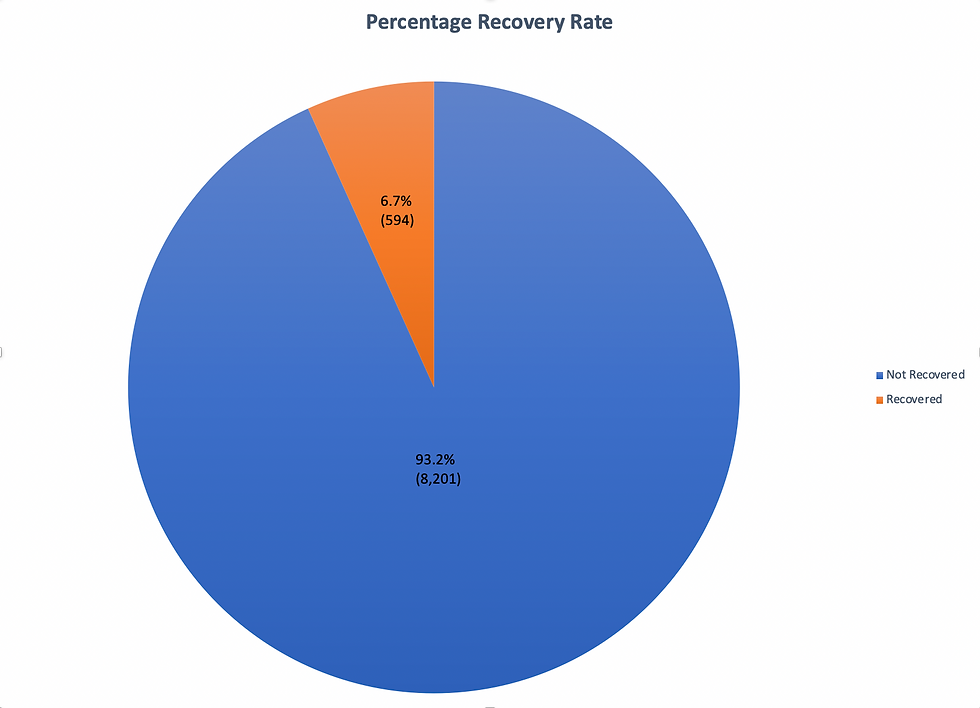
Pie chart showing percentage recovery rate of all lost animals in the last decade
Of the 8,795 reported cases of lost or stolen animals within the last decade, the Metropolitan Police department has only been able to recover 594 lost pets. The department attributes lack of proper micro-chipping or failure to keep accurate animal data for this damning statistic.
The borough of Enfield leads with the number of lost pets yet to be recovered. The area saw 200 birds go missing within just one month (July 2021) with none of the birds having yet been recovered. However, Hillingdon borough ranks as the most dangerous place to keep birds as pets as the borough has lost a total of 462 birds in the last decade (125 birds went missing in the borough in just one month – March, 2021) according to the data seen by The Hillingdon Herald.
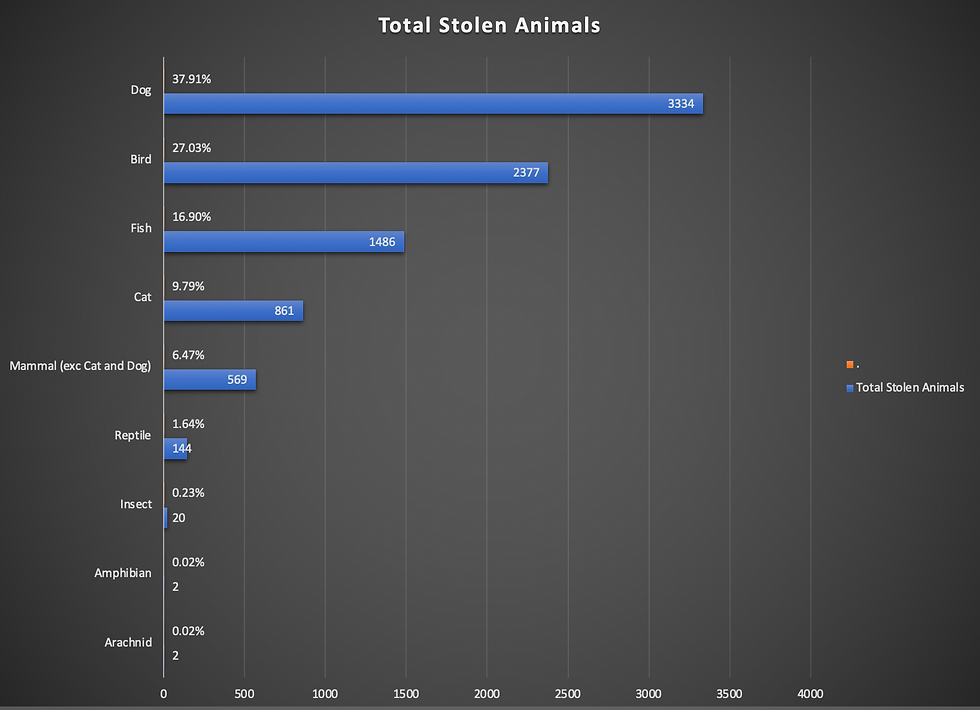
Bar graph indicating total number of stolen pets per animal type in the last decade
But even though birds remain at risk of theft among most homes in England, the most vulnerable of all pets remains man’s best friend. More than 3,300 dogs have gone missing in England over the last decade. “If Milo was a dog, I think we would have found him much sooner,” shares Ms. Anwar. Her belief is that dogs are more agile and have the ability to retrace their steps back home much faster than other animals. But the data shows that of the 3,334 missing dogs only 419 have been able to return home over the years.
The Metropolitan Police failed to respond to queries about the context over the disappearances of some of these animals even though the Royal Society for the Prevention of Cruelty to Animals says dogs have over the years been subjected to more brutal treatment from their owners than any other animal leading to some dogs running away from home. Croydon borough remains the most dangerous for dogs as 179 such pets have gone missing in the area since November 2010.
“No one should go through the trauma of having a missing pet; it’s the most devastating feeling on earth” Ms. Anwar concludes before she picks up Milo for another feeding session, the third one the feline will have for the day.


Comments