

Inside Majengo: The Pain, Survival, and Untold Stories of Nairobi’s Forgotten Community
There is a place in Nairobi where stories don’t make headlines unless someone dies.
A place where children grow up faster than they should, where mothers bury their sons, and where hope fights daily to survive against poverty, crime, and silence.
That place is Majengo!

Majengo’s story begins long before the crowded alleys, the crumbling mud houses, and the stigma it carries today.

In the early 1900s, families were forcefully evicted from areas like Pangani and Kileleshwa to make way for colonial development. They were relocated and confined to what would later become Majengo — a settlement officially recognized in 1926 as a Muslim community. What began as a structured settlement slowly transformed into something else.
Something forgotten.
Residents were never given full ownership of their land. Decades later, many still live without title deeds — trapped in a system where they belong, yet do not fully own.
“We Are Forgotten”

Walk through Majengo today, and one thing becomes immediately clear: neglect is everywhere. Open sewage lines snake through narrow paths. Makeshift homes stand shoulder to shoulder.
Overcrowding and underdevelopment exist side by side in an uneasy balance.
For residents like Rita Mbatha, this is more than just an environment — it’s a daily struggle. “We are forgotten… we don’t see leaders here,” she says.
Healthcare is limited. Sanitation is poor. At one point, cholera outbreaks spread through the area — a harsh reminder of how vulnerable the community is. And yet, life goes on.
Crime, Survival, and the Youth Crisis
In Majengo, survival often comes at a cost.
With nearly 85% of the population unemployed, many young people find themselves at a crossroads — between opportunity and crime.
Some choose to hustle.
Others don’t get that chance.
Every week, multiple criminal cases are reported. Many involve young men — some barely teenagers. For some families, the fear is not just crime, but what comes after. Residents speak in hushed tones about extrajudicial killings, alleging that young men suspected of crime are sometimes killed by police without trial.

For mothers like Fatuma Mbuve, this is not a statistic. It is personal.
She has lost two sons.
“To this day it hurts me… even my grandchildren don’t understand why I cry,” she says.
Her story is not unique.
It is Majengo’s reality.
The Weight Carried by Women
In Majengo, women carry more than just households — they carry grief. They are often the first to arrive when tragedy strikes. The first to mourn. The ones left behind to pick up the pieces. Some, like Rita, recount burying multiple young men within months.
“Last October, we buried eight boys,” she says quietly, "8 of our sons!" Eight lives. Gone. Each one a story that could have been different.
Rita begs us to halt the interview as her watery eyes sink deep into her hands. We take a moment. We sympathize and empathize with her.

But I know deep down that this story ought to be told. It must be told.
The animosity here stems from years of mistrust between the youth of Majengo and the security personnel in the area. This tag of war is often messy, bloody and deadly.
A History That Still Shapes the Present
The slum dwelling is not just defined by poverty and crime. Its identity is layered — shaped by history, culture, and long-standing stigma.
The area has deep Islamic roots and a strong sense of community identity. Yet over time, it has also faced suspicion, including allegations linking it to extremist recruitment — claims many residents strongly deny.
At the same time, another shadow lingers.
Prostitution in Majengo dates back to the colonial era, when women were reportedly brought in from Tanzania to serve British soldiers returning from war. Decades later, the practice still exists, adding another layer to the area’s complex social fabric.
But Majengo is not just a story of suffering. It is also a story of resilience. Amid the struggles, young people are trying to rewrite the narrative.
Men like Juma Famau spend their days selling doughnuts or running small businesses, choosing honest work over crime — even when the rewards are minimal.

“We try to reduce crime… and earn something small,” he says.
It is not easy. But it is a start.
Even in the darkest corners, hope finds a way to exist.
Housing in Majengo reflects the deep inequalities that have defined the area for decades.
Most residents live in modest, often sub-standard structures — many of them aging mud houses — largely because land ownership remains uncertain. For years, families have occupied these homes as squatters or under limited allotment arrangements, with many still lacking title deeds despite paying monthly rates of around 6,000 Kenyan shillings. Rent, while relatively low by city standards, remains a burden for many: a single room can cost between 800 and 2,500 shillings per month, a price that is still out of reach for a community where unemployment is widespread.
In Majengo, the cost of housing is not just financial — it is tied to decades of displacement, insecure tenure, and a lingering sense of being permanently temporary.
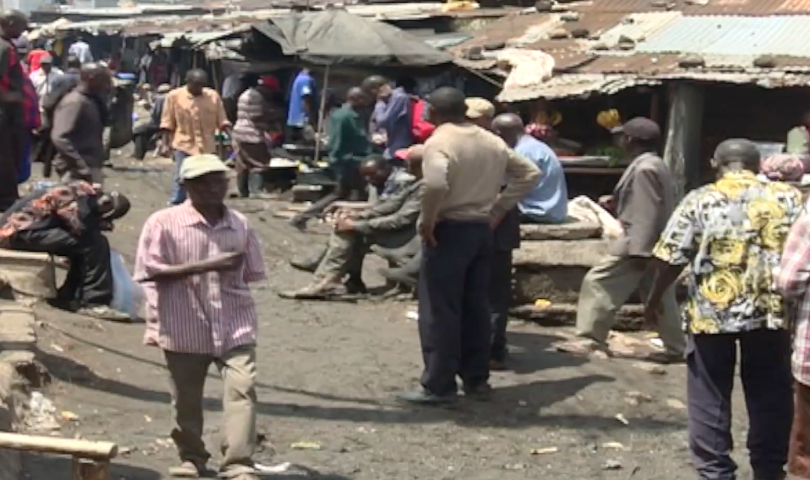
Majengo is often reduced to a stereotype — a “dangerous slum,” a place defined by crime.
But that is only part of the story.
Behind every statistic is a person.
Behind every headline is a family.
Behind every loss is a community trying to survive.
Majengo is not just a place.
It is people.
People who say they have been overlooked for too long.


Comments